Efficient Financial Tips For Fresh Graduates

Congratulations! After the backbreaking years of higher education, you have graduated. The next chapter ahead will not be easier but I hope you find prosperity and joy in the process.

Much like attaining your degree, financial responsibility takes hard work and discipline. Start by reading these following tips to help you stay on top of your money:

GRAB A BOOK OR TWO

Read and understand materials about self-empowerment, investment, and money management. Here are four books to get you started with:

“The War of Art” by Steven Pressfield
“Turning Pro” by Steven Pressfield
“A Money Saving Mindset: 40 Ways to Help You Save” by Derek Polen
“Why Stocks Go Up and Down” by William Pike
“The Intelligent Investor” by Benjamin Graham

AVOID UNHEALTHY COMPARISONS

It is important to limit lifestyle comparisons even before you start making decent amount of money. Comparing your own “backyard” to that of others is basically human nature. However, turning this auto-response into a habit can become unhealthy not just for you but for your wallet. Imagine keeping up with your friends or coworkers who spend their money on designer bags, five-star restaurants, and trendy gadgets. Following their footsteps can easily put you to debt.

SAVE AT LEAST 15% OF YOUR INCOME

Mr. Tan Kin Lian, an experienced professional and former CEO of NTUC Income, highlights the essence of saving at least 15% of your income in addition to your CPF account. Your savings will help you pay for emergencies without having to be tied up with a creditor’s interest rates. Growing your savings shall start with your first paycheck.

PROTECT YOURSELF FROM UNEMPLOYMENT

Having a future mindset can help you cope with unforeseen events such as unemployment. To protect yourself from the immediate effects of unemployment, Mr. Tan Kin Lian also suggested these:

a. Save at least 6 months’ worth of your income.
b. Shy away from relatively large loans that require fixed repayments within several years.
c. Avoid saving in a life insurance policy.

REALIZE THE VALUE OF MONEY

I began to saw the true weight that money holds when I had my first full-time job. It was difficult for me to spend the money that I worked hard for. This is because I know the exact amount of time and how much sweat I poured just to earn my salary. I hope you realize soon especially because we live in the most expensive city in the world.

LIMIT SPLURGING FOR “EXPERIENCES”

Many young adults have turned their spending patterns to experiences rather than material goods. If you solely spend your hard-earned income to pay for your travel without the consideration of your savings, things can go down hill. Saving money is important not only because emergencies may arise but also because retirement is inevitable.

Image Credits: pixabay.com


Image Credits: pixabay.com


Read More...

Brilliant Ways To Simplify Your Finances

1. UNTANGLE YOUR STREAMS OF INCOME

If you are juggling through your day job, online business, personal blog, and weekend side-job…take a breather!

Multiple sources of income sounds great in theory but it can be very challenging at times. I can attest to this statement as I am freelancer. When new opportunities are handed to you, analyze if you (and your schedule) can handle another weight. You do not want to waste your precious time on things that are not necessary.

2. ALLOT MONEY USING LAST MONTH’S INCOME

Budgeting your money is efficient for two reasons. It brings you a sufficient cushion as you are a month ahead of your bills. Also, it is very helpful for people with irregular income.

Image Credits: wikihow.com/Do-Envelope-Budgeting

Image Credits: wikihow.com/Do-Envelope-Budgeting

3. CUT DOWN YOUR BANK ACCOUNTS

In a world filled with choices, most people have several number of financial accounts. You may have an account that brings highest interest or another that brings the highest shopping rebates. More than being complicated, the constant shuffling between these accounts can get messy. This is why you must narrow down the number of your accounts.

4. REDUCE YOUR JUNK

Reduce your physical and virtual junk authorizing creditors or vendors to issue bills using one method. If you want to go paperless, keep digital copies of your important documents on the “cloud” or on an external hard drive. If you are old-fashioned, organize all your documents in labeled folders or boxes.

5. SET SMART FINANCIAL GOALS

Develop a habit of financial goal setting to know where you are going and to plan how you can get there. Write down your financial goals with a trusted witness and contemplate the monetary milestone you would like to accomplish in the next 2 to 5 years. Track down your monthly progress.

6. CONSOLIDATE YOUR BILLS

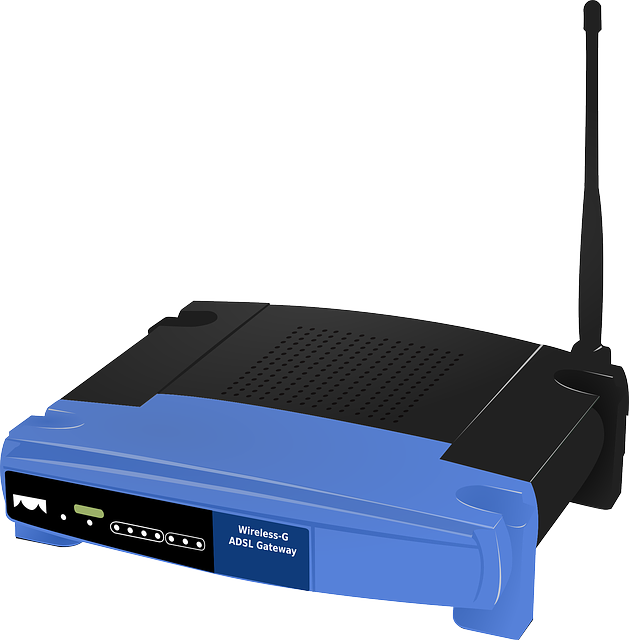
Are you tired of receiving 3 separate bills for your landline, hand phone, and internet services? Consider consolidating all of them in a single bill by signing on bundled services. For example, Singtel’s Fibre Home Bundle (1 Gbps) offers the following:

a. Fibre Broadband,
b. Wireless Dual-band Router
c. 4G Mobile Broadband Plan, and
d. Home Digital Line with free unlimited local calls.

This plan costs S$59.90/month with a contract of 2 years. What is nice about this plan is that it offers an additional “10% off monthly Mobile subscription” (T&C apply).

Image Credits: pixabay.com

Image Credits: pixabay.com

By bundling these services together, you just eliminated 2 monthly bills!

Sources: 1, 2, & 3

Read More...

Stop Worrying About Making Ends Meet, Know Where Your Money Goes

Living barely within your income is not a laughing matter! When you are living from paycheck to paycheck, your life is filled with constant stress, worry, and dread. It is a struggle to gain control of your money and your commitments.

How did you end up like this?

For starters, you not be planning for your future and only thinking about the current situation. With this attitude, do not be surprised if you will be working beyond the retirement age! Another reason maybe due to your history of overspending. Perhaps you were spending too much before that you fell into an avalanche of debt and can never move pass it.

In order to cease your worries, a huge turnover can be money flow management. You must give conscious effort to know about where your money flows in and out. Once you have control over your money flow. Then, you will be able to create a systematic financial operating system that consists of: money flow management and budgeting.

Start by identifying your fixed expenses (essentials), variable expenses (non-essentials), and savings (investments) first. Organize these items in a physical ledger or a budgeting App such as EXPENSIFY, MONEYWISE, POCKET EXPENSE PERSONAL FINANCE, and MINT.

Allocating your money to fixed expenses shall be your top priority. Fixed expenses include the goods and services that you cannot live without. Your rent, utility bills, school fees, and transportation costs fall under this category. Since our spending habits and personal needs are different, you must include the categories that are relevant to you. For example, a hand phone is a necessary means of communication. However, the type of hand phone that you bought makes all the difference.

Do you really need the latest Smartphone released by Apple when your current hand phone is working just fine? If you are purchasing it for vanity’s sake then it becomes a non-essential.

Non-essentials or variable expenses include the goods and services that do not compromise your survival. This category includes your clubbing costs, shopping sprees, and overseas vacations. Always save your non-essentials fund for last to prevent becoming broke.

The last category is your savings. Your savings not only protect you from unwanted events but it also prepares you for the future. It includes your investments in stocks, bonds, properties, or mutual funds (items that generate profit). Once your done with your fixed expenses, come up with a well-thought-off amount for your savings that you can consistently maintain.

Some people believe that purchasing a car is considered as investment but in respect to the categories of the “money flow management”, it is not. You see, every time you drive your new vehicle, its value depreciates. It is more of an asset that can sometimes be used as a collateral when you take out a loan.

Image Credits: www.pixabay.com

Image Credits: www.pixabay.com

Always ensure that pay your bills on time, otherwise it will defeat the purpose of the above system. With a smart way of prioritizing your expenses and budgeting your money, you will find yourself in a more stable position in no time!

Read More...

How To Create And Follow Your Financial Goals

Reaching for something you really want to have takes hard work, determination, realistic expectations, and savings. All these are vital to achieving your financial goals. The first step that you must take is to organize not just your financial documents but also your time. Commit at least 30 to 60 minutes per week to financial planning including your goals.

Planning for your goals start by making them specific. Identify what you really want and how much will it cost. Do you want a flat at an expensive condominium or at an affordable HDB? The more transparent your financial goal is, the more realistically you can save.

When making a financial plan as a married couple, it is paramount that you share the same financial goals. Discuss it together and make sure that you each contribute to achieving them.

Once your financial goals are all set, categorize each one in terms of the length of time you will spend to accomplish them. The categorization includes short-term, mid-term, and long-term financial goals. Short-term financial goals (SFG), such as purchasing a microwave, are achievable in less than a year. Mid-term financial goals (MFG), such as an expensive family vacation to Europe, can take up to 5 years. Lastly, long-term financial goals (LFG) are achievable in more than 5 years. This includes your retirement plan.

After you categorized your financial goals in terms of time, it is time to prioritize each one of them so you can concentrate better. For instance, if you prioritize on saving for your children’s tertiary education (LFG) and a new microwave (SFG) rather than spending for a new car (LFG) and a new phone (SFG) then, save for it first.

The last step you must take is to figure out how much you will need to achieve each one. Do not be discouraged if the total amount seems overwhelming. What is important is the fact that you have realistic and tangible financial goals to work toward to. Revisit these goals every month and continue to refine your financial plan. If there is a difficulty in keeping your goals, analyze your budget and see if there are any areas that you can reduce or eliminate. This will increase your savings.

Image Credits: pixabay.com (CC0 Public Domain)

Image Credits: pixabay.com (CC0 Public Domain)

Sources: 1, 2, & 3

Read More...

Handling Money As An Introvert Versus An Extrovert

If you are classified as the shy or quiet one, you most likely belong to a special group of people who are known as the introverts. Contrary to the popular belief, introverts are drained by social interaction. Many introverts can socialize easily but they just prefer not to. In fact, they are more emphatic and interpersonally connected than their counterpart – extroverts.

Extroversion is a strong factor of personality that is difficult to alter. Generally, extroverts have an advantage in the professional scene due to their approachable and outgoing nature. They flow through life in search of interpersonal interactions, leadership opportunities, and new experiences.

You must use your unique introverted or extroverted qualities to your advantage to enhance your financial life. If you do not know which type you belong to, please take the free test here.

FOR INTROVERTS

Image Credits: pixabay.com

Image Credits: pixabay.com

a. INTROVERTS PROCEED WITH CAUTION

When it comes to money, introverts tend to be more cautious at risk-taking as they make sound investments and goal-directed savings. They secure their future by carefully avoiding scams and financial schemes.

b. INTROVERTS SHOP AROUND

As introverts are observers by nature, they collect information from various sources first before making a financial decision. To get the best deal, they also read through the fine print and consider its every aspect.

c. INTROVERTS ARE MORE CREATIVE AT EARNING

Introverts are more likely to strategically plan things and think of creative ideas before finally making a decision. Hence, they can think of more innovative ways to earn money and properly manage the money they already have.

d. INTROVERTS SPEND LESS ON SOCIAL GATHERINGS

Since introverts are less inclined to participate in social gatherings, social expenses are the least of their worries. Furthermore, they may not be easily swayed by what the crowd is doing (e.g., avoiding costly bandwagon trends).

FOR EXTROVERTS

Image Credits: pixabay.com

Image Credits: pixabay.com

a. EXTROVERTS MAKE QUICKER DECISIONS

Extroverts are willing to grab the opportunity faster once it knocks. In some cases, this quick judgment can be advantageous for one’s financial life but it can also be disastrous in other circumstances.

b. EXTROVERTS ARE MORE CREATIVE AT INVESTING

As extroverts are more likely to engage in networking, they are able to learn more about the different types of investments or the new investment strategies. Their fearless and confident attitude can be rewarded when the right investment choices are made.

c. EXTROVERTS TRY NEW THINGS

Introverts tend to stay back while extroverts embrace new experiences with open arms. Extroverts are able to earn and save more by taking risks on new perspectives, jobs, ideas, and products.

d. EXTROVERTS GET FAIR DEALS

When extroverts are in a negotiation or bargaining situation, they may be more aggressive about setting things straight. Introverts may want to avoid confrontation but extroverts will not back down until they feel that they received a fair deal. Getting the value of your money is not a  bad thing for your finances!

Sources: 1 & 2

Read More...