How To Settle In A New Job With Ease

Getting ready for your first day at work can mimic your experience on your first day in a new school. As butterflies roam your stomach, your first day in a new school is both terrifying and exciting. You walk in the grounds of an unfamiliar hallway with a schedule in hand. You try your best not to trip or to embarrass yourself in front of other kids. Years later, those similar emotions can be felt as you show up to a new workplace.

You do not know what expect! The first couple of months can be confusing, exciting, and terrifying. These months can make or break your time at a particular company. Start adjusting to a new job by preparing for your first day.

PREPARE FOR YOUR FIRST DAY

Use the weeks leading up to your first day wisely by preparing yourself mentally and physically. Accomplish as many errands as possible such as medical checkups, car maintenance, and visits to relatives. Get adequate amount of sleep and renew your fitness regimen. If time permits, you may freshen up your mind by taking a short staycation.

Prepare for the position by researching about the company and its business press. You can search through its social media accounts to get a grasp of their branding. You can also request for a list of readings from your future boss. He or she will be impressed that you want to start work well-informed and educated.

MAKE A GREAT FIRST IMPRESSION

Your first impression counts. Show up on your first day well-dressed and with enthusiasm to work. Come early and put your mobile phone away to stay focused on the tasks at hand. Take notes on the tasks and the people around. What are their names? It is important to write them down. You can learn a lot from these people.

ASK A LOT OF QUESTIONS

It is easier to assume that we know what to do. Sometimes, we are just too afraid to admit that we cannot do something. However, asking for assistance is the best way to resolve an issue. You are in a new environment. Admitting your lack of knowledge in certain realms may show your eagerness to learn. Take notes.

DO NOT COMPARE THINGS TO YOUR PREVIOUS JOB

No matter how skilled you were in your previous company, it is unpleasant to brag about it in your current working environment. Instead, let your actions speak for itself. Take this opportunity to learn new things, to contribute new ideas, and to share your experience with your co-workers. Find the right platform to air your concerns.

LISTEN TO CULTURAL CLUES

To help you get a grasp of the company’s culture, listen and observe at all times. Building rapport with your new co-workers is important because it lets you assimilate to their culture faster. Be wary. Do not let your desire to fit in encourage you to engage in gossip. You do not want to employ socially destructive behaviors. Listen to cultural clues, but avoid gossips.

Image Credits: unsplash.com

You are the new employee. Smile and make the effort to reach out to them by offering coffee or lunch. This way, you will be able to break the ice.


Sources: 1 & 2


Read More...

Retrenched? Here’s How You Can Get Back Into The Fray

Singapore is in its worst recession since her independence and retrenchment figures are climbing up. For those who are retrenched, initial negativity and shock inevitably surface. Here is how you can manage the emotional impact to ensure that you can stay in the game, and hopefully land a job that is just around the corner.

Keep Your Spirits Up

Photo 41765538 © Gajus | Dreamstime.com

A gamut of emotions often accompanies a retrenchment; ranging from shock and denial to the final stage of acceptance and relief. It’s an emotional roller coaster but do bear in mind that rejections SHOULD NOT define or confine your capabilities. On the other hand, dealing positively with your emotions lay the foundation for personal growth. Take this as an opportunity to re-assess your career choices and consider the options available. For instance, having a positive attitude and an openness to new opportunities will boost your chances of finding employment once again.

Manage Your Finances Prudently

Photo 53759160 © Szefei | Dreamstime.com

If you are retrenched, you might receive a severance package. A common mistake that most who are laid off make would be to splurge on something to make themselves feel better temporarily. Instead, the prudent thing to do is to budget and plan ahead. Make an estimate on how long this retrenchment package may last while you continue to look for a job. This is especially critical if you have familial responsibilities as the financial obligations will not disappear. A helpful budgeting tip is to track your daily expenses and cut down on unnecessary expenses such as luxury items or expensive restaurant meals. It may also pay off in the long run to use part of the severance package to invest and upskill yourself. This can only benefit your aim to get back into the fray.

See A Career Coach

Photo 153900280 © Fizkes | Dreamstime.com

The job search journey may be daunting, especially when you have not been actively looking for a job for some time. Career preparation will be useful in gearing you up to re-enter the workforce and seeing a career coach is definitely one of the key actions to take. With personality and strength finder tools, you will discover more about your strengths and weaknesses as you embark on a journey of self-discovery. Career coaches have a wealth of experience in providing customised career guidance such as:

  • Assessing your personality, qualifications and experience to steer you in your career path towards the industry of your choice
  • Assisting to review your resume, boosting its chances of standing out (Personal strengths are listed categorically and aligned to career objective)

Do leverage the career coaches at Careers Connect, where personalised support is available through the CARE360 series of programmes, as well as Career Matching Services organised by Workforce Singapore (‘WSG’).

Consider Company Attachments

Photo 78661206 © Wiwat Chanovit | Dreamstime.com

While you continue to search for employment, do consider attachments provided by host companies that help you acquire emerging skills or expand your opportunities in new sectors. Such attachments offer a way to prove your value to the company and maximise your chances of being offered a full-time job.

SGUnited Mid-Career Pathways Programme provides mid-career individuals with traineeships and training opportunities at companies and public sector agencies. Alternatively, the Professional Conversion Programme is also available for mid-career PMETs to undergo skills conversion and move into new occupations or sectors that have good prospects for progression.

Remember, managing the emotional impact is half the battle won. Thereafter, approach Workforce Singapore (WSG) to tap on its Career Matching Services that will take you one step closer to securing re-employment again. Get back into the fray once again!

If you’re currently unemployed or have been retrenched, and are seeking career guidance, register your interest to see a career coach with WSG here. Complimentary for all Singaporeans and Singapore PRs.

Read More...

6 Ways To Write Emails With Stylish Confidence

Many of us spend a good chunk of our mornings to sending and reading emails. Surely, email-related tasks are permanently part of our to-do lists. However, do you do it with confidence and proper etiquette?

#1: REMEMBER THAT EVERYTHING IS DOCUMENTED

As writing emails become second nature to us, we sometimes forget that our work email is not always private. Remember that your work email technically belongs to the company. It can be fully monitored. In the age of fast-paced social media, an unpleasant email can easily spread out in a matter of seconds. You will not be able to retract a statement that fast! So, be professional at all times when you are using your work email.

Work emails are part of your company’s formal written records. Sometimes, these records can be used as admissible documents in the court. Those emails can be shared as a part of any legal proceedings and can be used directly against you. Thus, you must be careful in writing emails that contain sensitive information or commentary about other employees or clients.

#2: SET A REALISTIC TIMELINE FOR DEADLINES

We all have different work habits and some people do not have a sense of urgency when it comes to completing deadlines. Instead of writing “The deadline is tomorrow at 10:00 am!”, you may write something similar to this: “When can you get this done?” You may also write how much you will appreciate it if he or she can finish the draft today because you will have enough time to discuss necessary changes before the tomorrow’s deadline.

Help your co-worker see that you cannot extend or push deadlines because of him or her. We all exhaust our resources to meet the deadlines. It is only fair for others to do the same. Asking about the person’s timeline can instill responsibility because he or she knows that there is someone waiting for his or her output.

#3: HEAD STRAIGHT TO THE POINT

When giving out suggestions, you may write: “I think maybe we can…” This statement does not exude confidence and assertiveness. Instead, you may write: “It will be best if we can…” The second statement gets straight to the point too.

Everyone is busy, including you! It is best to get your point across as early as possible. Start the email with a quick and friendly greeting to address the person. Then, follow it up with the request or issue that needs to be addressed. “Input needed for project X by Tuesday (December 1), at 3pm”, writes Employee A. This message will alert the reader right away. Do add supporting details in bullet points or separate paragraphs so that no part of the request or issue is left out.

#4: STOP APOLOGIZING IN EMAILS

Refrain from starting a message with “sorry to bother you…” The act of sending an email entails a small intrusion on the reader’s time. If you really need to communicate via email, keep it short and concise. You do not need to apologize for sending out important matters. Moreover, apologizing throughout the email takes away the main idea of your message and diminishes confidence in you as the sender.

#5: DO NOT SPAM YOUR CO-WORKERS

As said above, everyone is busy. Please do not spam your co-workers with multiple emails every time you have a new idea. Keep a running list of the things you need to discuss or to ask to your co-workers. Then, send the list once a day. Saying that “it can be easier to discuss this in person” is better than re-writing an email for an hour with multiple threads.

Spare your energy to productive matters. Have a quick chat with the primary person over a cup of coffee. This way, you will be able to get your point across efficiently and you will be able to receive feedback at a faster rate.

#6: FORWARD NECESSARY EMAILS

Save your reader’s time and energy by using the “forward” button exactly where you are in the conversation. By doing so, your reader will immediately spot the message that you want him or her to see. Your reader will avoid shuffling through a pile of previous messages too! Furthermore, you can write: “let me know if you have questions” upon sending.

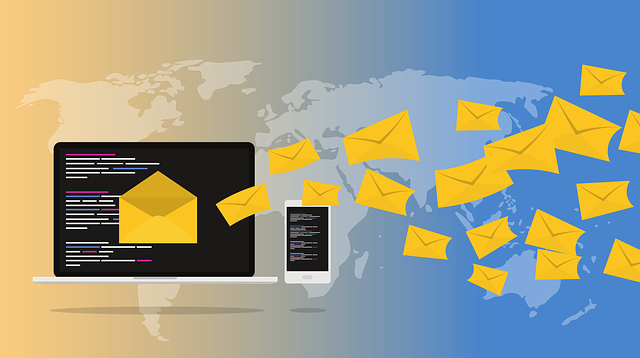
Image Credits: pixabay.com

Sources: 1 & 2


Read More...

6 Skills With High Demand In Today’s Workforce

It comes as no surprise that today’s workforce is constantly changing and adapting with the needs of our environment. Technology-driven careers are becoming more and more in-demand these days. No matter which field you choose to take part in, having certain skills can increase your likelihood of success.

Consider sharpening these coveted skills:

#1: CLOUD COMPUTING SKILLS

Who does not know the Cloud? Almost all our data are stored in the Cloud. Cloud computing allows access to data storage, software applications, and other services powered by the Internet. Skills in Cloud computing are sought after due to the increasing number of companies that switched its business functions to the remote servers.

Cloud computing requires technical skills to ensure data security, to perform migrations, to negotiate terms with Cloud service providers, and to implement the best practices throughout the process.

#2: ANALYTICAL REASONING

Analytical reasoning is the ability to make sense of the data gathered and to uncover insights that can help business decisions. You already utilize analytical reasoning in your day-to-day lives. Detecting patterns, observing people, brainstorming, interpreting data, making decisions based on several factors, and integrating new information are all required in shaping one’s analytical reasoning.

People who have strong analytical reasoning skills are assets to the company as they investigate the problem and find solutions in an efficient manner. They understand the situation first before making decisions and taking necessary actions to help achieve the company’s goals.

#3: MOBILE APP DEVELOPMENT SKILLS

As smartphones and other mobile devices become the center of our communication an job processes, the industry for mobile application development continues to thrive. More and more businesses have converted their consumer experiences and internal processes digitally. Thus, people with experience and knowledge in app development are in-demand.

Mobile app development is a set of procedures involving programming and creating applications or designing software for fast-operating mobile devices. Because apps are so common, you can find plenty of tutorials and classes for app creation. Check out coding boot camps to kickstart your app development career.

#4: PEOPLE MANAGEMENT SKILLS

Despite the technological advancements and the social distancing restrictions posed around the world, people management skills help strengthen the business. Strong people management skills involve building relationships, keeping the team on track, increasing the team’s morale, and helping others achieve their goals.

People management includes the use of both soft and hard skills. We need people who can help us deal with work stress and empathize with us, especially during this challenging times.

#5: UX DESIGN SKILLS

User experience design is essential in making the digital world work for us. UX design is important because it aims to fulfill the people’s needs. Moreover, providing positive experiences to the clients can increase the likelihood of them coming back to the website itself. You can find an increasing number of opportunities in this field. If you want to gain advantage in this field, you can enroll in an online degree program led by UX experts.

#6: SEO/SEM MARKETING SKILLS

Digital marketing (SEO/SEM marketing) help increase the visibility or the web presence of companies and start-ups. People who are experts on the field can help blossoming online retailers to get noticed. Being noticed and having more site traffic leads to increased customers and revenue. Many companies are realizing the importance of digital marketing and are regularly looing for people with strong SEO/SEM marketing skills.

Image Credits: pixabay.com

Try exploring the digital marketing courses available at Google Digital Garage. Most of them are free!

Sources: 1 & 2

Read More...

How To Alter Your Budget To Suit Your Work From Home Lifestyle

According to the multi-ministry task force handling COVID-19, Singapore may enter Phase Three by the end of 2020 should the community cases remain low in the country. The restrictions reflected by this upcoming phase may last for a year or more. That being said, more and more people are working from home.

This huge shift in the global workplace has brought many changes in our lives. Whenever big transitions occur, it is a good opportunity to re-assess all the aspects of our lives including our finances. What has changed in your budget ever since you started working from home?

Reduced costs on transportation, work clothing, daily coffee stops, and dining out were usually observed in the previous months. In contrast, many experience a spike in utilities, groceries, and online shopping fees. How can you better prepare for your future with this new set-up?

#1: RE-EVALUATE WHERE YOUR MONEY IS GOING

Get a realistic view of your finances by pulling out your bank statements, credit card bills, and other month expenses from the past three months. If you are using a budgeting app such as Mint, you may track your spending using the information inside the app. Look for unnecessary categories or recurring expenses that you can do without. This will help you spend less than what you have originally planned.

Aside from your spending, concentrate on other parts of your personal finance such as investments and emergency funds. You have the luxury of time to re-evaluate how much you are saving in your emergency funds. Ensure that the money you put inside will be sufficient to cover unforeseen events such as unemployment. We must overcome complacency during these tough times.

#2: CONSIDER DIFFERENT BUDGETING STRATEGIES

As you establish your new budget to suit your work from home lifestyle, you may employ different strategies such as goal-specific budget and the 50/30/20 method. The former focuses on the goal and not the percentages. You may start with a specific short-term goal such as saving S$50 for your emergency fund this week or a long-term goal such as putting away S$5,000 for a vacation next year. Break down your goals and allot how much you need to save per week or per month. Ensure that you meet your other financial responsibilities as you prepare for your goals too.

The 50/30/20 method entails putting 50% of your take-home pay to your fixed expenses including groceries and rent. 30% needs to go to your variable expenses such as entertainment and clothing. While, 20% is dedicated to your savings. Choose a strategy that will best work for you.

#3: STORE EXTRA CASH IN YOUR HOME

Many of us are working from home because there has been a shift in the economy due to the unpleasant effects of the pandemic. It helps to be prepared as we live within the realms of uncertainty. Store extra cash in your home for emergency situations. You may label this as your emergency fund, which can cover your expenses for at least six to nine months.

Knowing that you will be alright for a considerable amount of time before needing to use other financial resources can help you sleep better at night. This will prevent you from incurring debts.

#4: MAXIMIZE YOUR TELECOM AND INTERNET PLANS

Because most of our time are spent at home, it comes as no surprise that our utilities are higher now. Do your best to ensure that you are getting the most out of your telecom and internet plans. If your plan has an inclusion of data, try to substitute a costly mobile call for calling over at WhatsApp or Telegram. Various online platforms offer free calling and video-conferencing services worldwide. Take advantage of that!

#5: CONSERVE ENERGY

This new living and working arrangements have considerable effects on our electric bills. As much as possible, conserve energy on the devices and appliances that you work with. Unfavorable habits such as leaving your laptop constantly plugged in or forgetting to unplug your smartphone charger can cost you.

Image Sources: unsplash.com

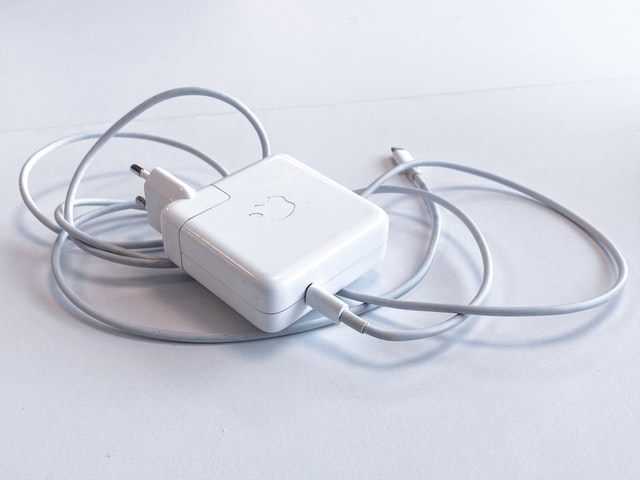
One of the easiest ways to save energy is by ensuring that your cables or chargers are unplugged. Most devices work best with the 40-80 battery rule. You must plug the charger when your battery drops below 40% and disconnect the plug when the battery reaches 80%. Leaving a laptop or handphone constantly plugged in can cause extra wear and tear to the battery. Take care of the devices, which you use on a regular basis.

Sources: 1, 2 & 3


Read More...