Quit Sending These Job Interview Red Flags

The new year beams with career possibilities and job opportunities. As more and more stores have opened, many eager candidates have been given the chance to shine. These candidates bring their best behavior during job interviews. They give answers that the employer wants to hear and attempt to convince him that he or she is the right person for the job.

Knowing which interview red flags to watch out for can help you speed up the process of screening and hiring. You do not want to feel the costs of hiring badly, nor do you want to send the wrong message to an interviewer. Consider these tips.

#1: ARRIVING LATE FOR THE INTERVIEW

Tardiness demonstrates a lack of respect for people and their time. It is the hallmark of unsuccessful people. When a candidate arrives late, he or she gets flustered and apologetic. This type of person can keep meetings from starting, conduct customer visits following their schedules, and constantly say that they will be late for work.

With so many qualified candidates, why would an interviewer hire someone who is late? An employer must not hire someone who is late for the most important meeting of his or her career.

#2: LACK OF COMPANY KNOWLEDGE

Red flags are shinning when you show little to no knowledge about the company’s products or services, customers, and target audience. It is essential for a candidate to research on the company’s background as they prepare for the interview. Start by reading through the pages of the company’s website.

A candidate who has no knowledge about the company shows lack of preparation and interest about the prospective role. You may come across as someone who fits poorly within the company’s values and goals.

#3: LACK OF OWNERSHIP

Another red flag is a candidate who does not admit to any responsibility for his or her past mistakes. It is unpleasant if you blame your co-workers, bosses, and previous company for failed projects and more.

As an interviewer, you must listen carefully to the reasons why someone left his previous job. The right candidate will admit to errors, make thoughtful mistakes, and do their best to repair their problems.

#4: BRAGGING ABOUT OTHER OFFERS

If you want to convey that you are desirable, bragging about your other offers is not a good idea. Arrogance is not an attractive quality. However, mentioning about other offers may not always be a red flag. At the later stages of your job application, it is alright to be transparent when it comes to your other offers. You can say something like this:

Image Credits: pixabay.com

“I am very interested in the position you have offered me. Please let me know the timing and details for the next step, because I am also evaluating another offer.”
Sources: 1 & 2


Read More...

Useful Employment Support Guides (that you probably didn’t know) on LifeSG App

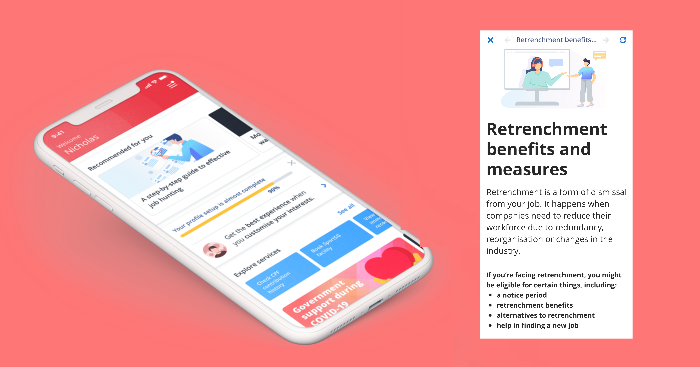
The coronavirus pandemic has upended the lives of many families and caused a loss of jobs. To help retrenched workers and jobseekers, GovTech collaborated with Workforce Singapore (‘WSG’), e2i, TADM, TAFEP and SkillsFuture Singapore (‘SSG’) to develop new modules on the LifeSG App (rebranded from Moments of Life). These employment support modules take a user-centric approach to show relevant information in a bite-sized manner that is easy to understand for the everyday man on the street. It informs target audience on the assistance and job opportunities available to them. Simply look for these modules under “Discover your next career steps and find support” section under the home page of your LifeSG App.

Here’s a summary of each employment support module that you will find on LifeSG App and how they can be of help.

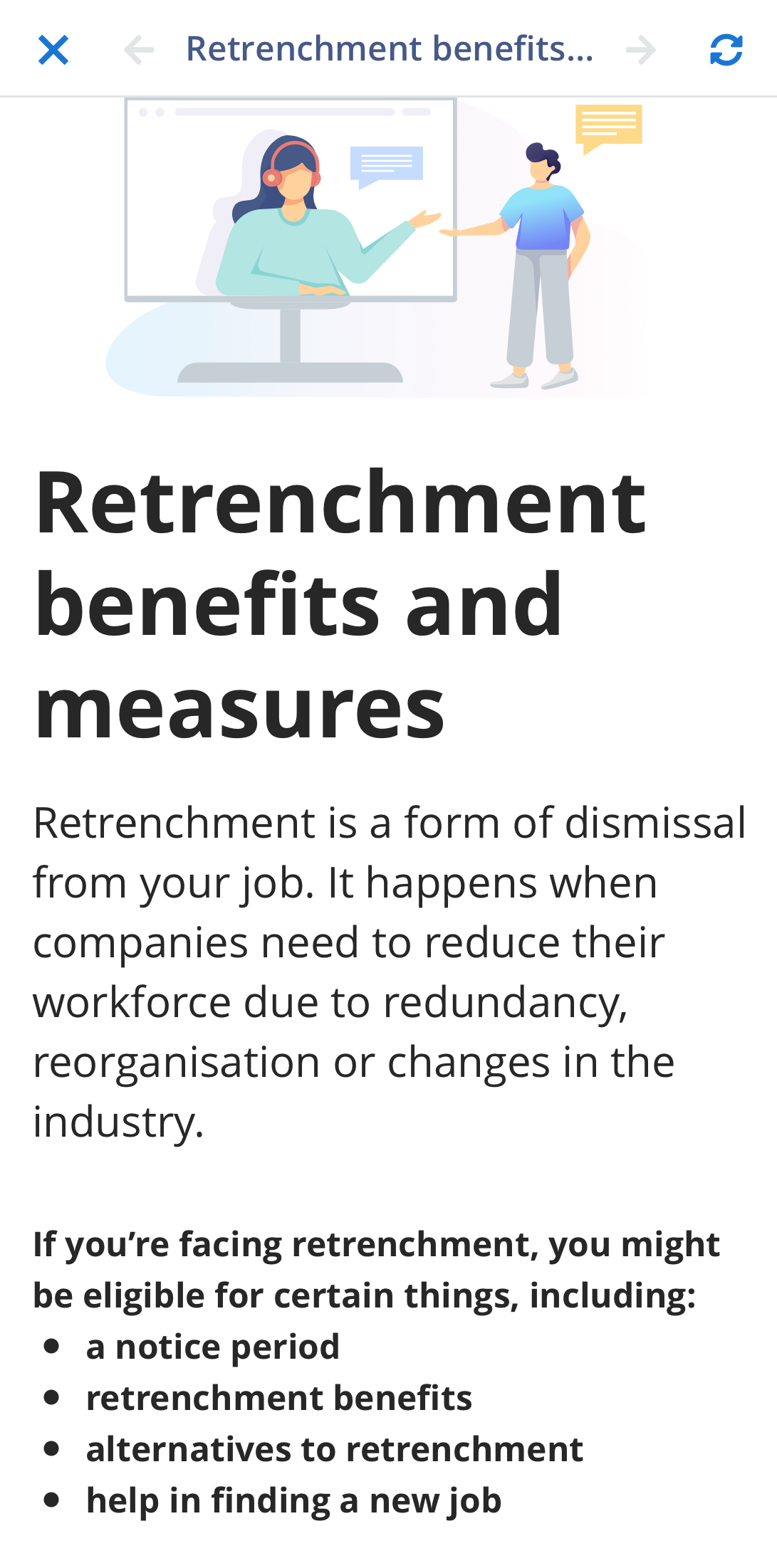
1. Know Your Retrenchment Benefits and Measures

Workers who have been retrenched or are at-risk of retrenchment may not be aware of the resources available to help them during this difficult period. They may also be unaware of the benefits due to them when faced with an impending retrenchment. Some of the benefits that retrenched workers may be eligible are the following:

  • a notice period,
  • retrenchment benefits,
  • alternatives to retrenchment, and
  • help in finding a new job

As employees, it is critical for us to understand our rights so that we know what precautions to take and what to do if there is a dispute.

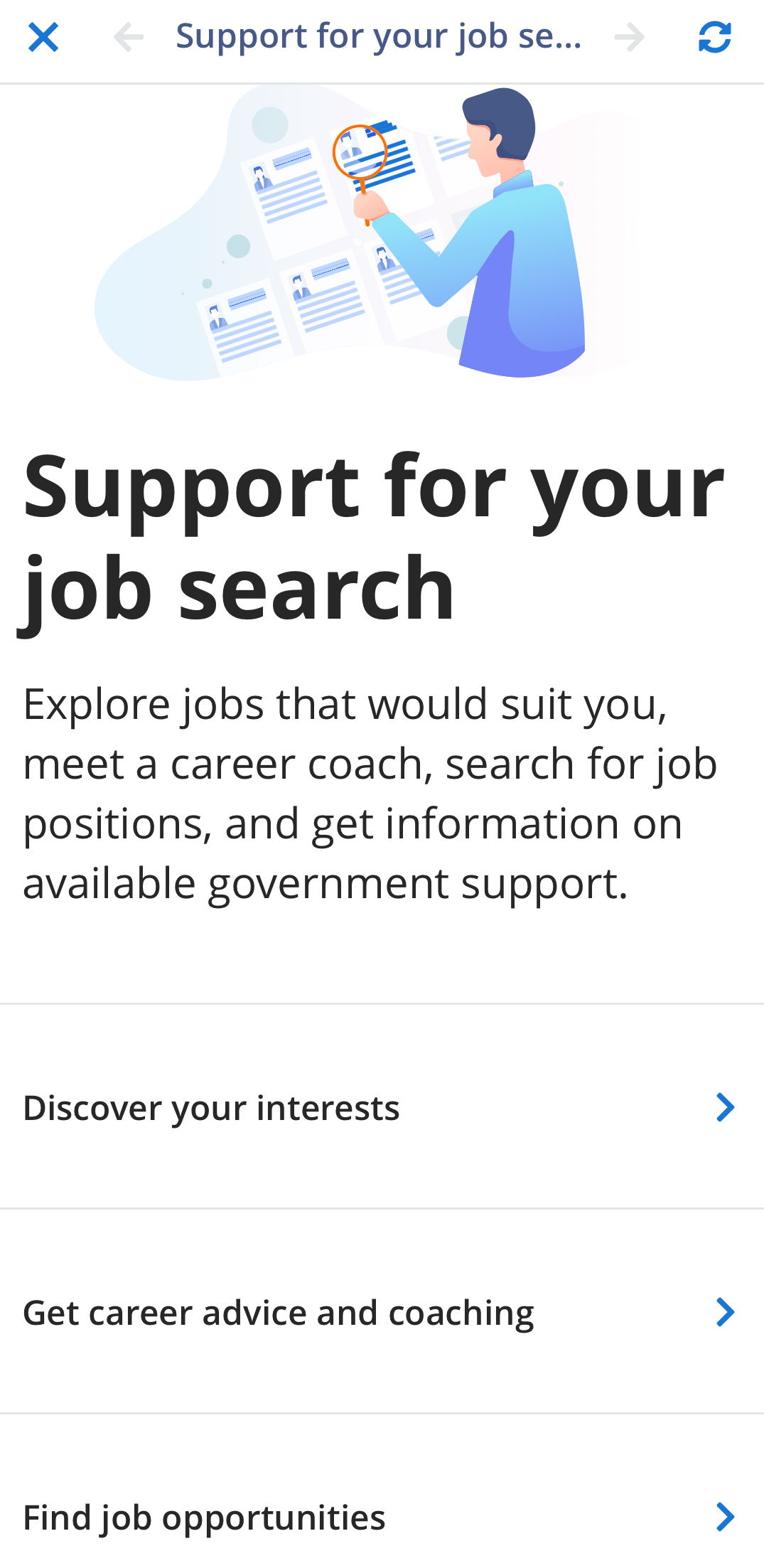
2. Support for Your Job Search

The “Support for your job search” module helps retrenched individuals and job seekers to:

  • Find opportunities for new jobs via career fairs, access government support schemes and convert existing skills to make a mid-career switch. These enable the job search process to be more efficient, as well as increase the number of job opportunities that they can access.
  • Access customised advice and forge career plans from career coaches at WSG, e2i etc. These professionals will help you to understand your personality, area of interests as well as strengths and weaknesses. All these are useful to guide you to better understand your career objective in life
  • Explore courses to upskill/reskill to ensure that you are always ready for your next role in this fast-changing world. Armed with the relevant professional certifications, you will be one step closer to landing the job that helps you achieve your career goal.

Do not underestimate the toll that every unsuccessful job application takes on a job seeker’s morale. Therefore, having a well-thought-out strategy advised by the professionals and executing it is half the battle won in your job search.

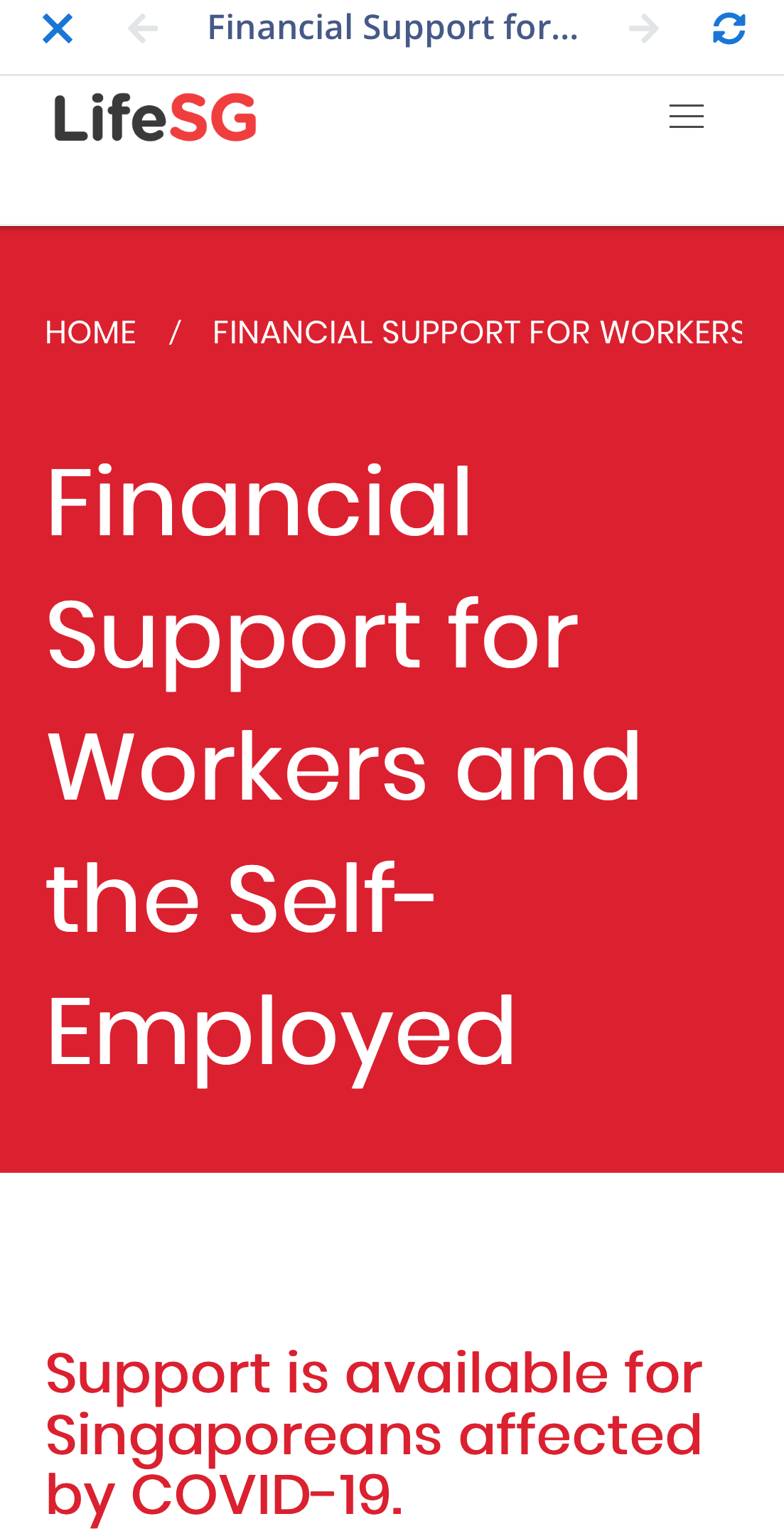
3. Financial Support for Workers and the Self-Employed

Ever since COVID-19 struck, the Singapore government has been quick to dole out relief measures to provide financial support in an unprecedented manner to ensure that no one is left behind. This specific module is handy in allowing individuals across the different employment categories to browse the various listings of government agency schemes and COVID-19 relief measures:

  • Unemployed (including retrenched) individuals
  • Lower-income individuals
  • Individuals with reduced income
  • Self-employed persons

Here is a case study of how an unemployed individual can tap on the various government agency schemes and COVID-19 relief measures to tide him through this difficult period. Mr Tan is a 40-year-old Singaporean who works in the travel industry. As a result of the COVID-19 pandemic, he has been placed on involuntary No-Pay leave by his company. He can apply for the COVID-19 Support Grant and receive up to $800 per month for 3 months which would be credited directly into his bank account. In addition, he can receive Job and Training Support by Workforce Singapore (WSG) or The Employment and Employability Institute (e2i) to help him upskill and reskill. This allows him the option of convert existing skills to make a mid-career switch should he decide to. Understanding the various schemes and grants available to him, he can conveniently apply for them online via the mobile app.

With information organised in a succinct manner, it is easier for them to know what financial schemes they are eligible for, as well as information on the application process. This ensures that those who need financial aid gets them in the shortest possible time so that the disruption to their daily lives is mitigated.

https://articles.life.gov.sg/financial-support-workers-self-employed/

Scan the QR code for more articles on the type of support available for Singaporeans affected by COVID-19.

Download the LifeSG App Today

Government has set aside plenty of help so that Singaporeans can tide through this pandemic and emerge stronger. Download the LifeSG App today to get a firm grasp of this helpful information. Also keep a look out for more features related to providing employment support that will be rolled out in subsequent phases.

https://go.life.gov.sg/XwD9

Discover your next career steps and find support with the Employment Support modules on LifeSG App!

Read More...

6 Simple & Legit Ways To Earn Money In Singapore

As we abide to the social distancing protocols and the restrictions brought by the pandemic, many of us began relying on delivery services to get household essentials such as food and grocery. Due to the high demand for delivery services, it has become a lucrative sideline for many locals. If you are not able to drive a vehicle and are looking for ways to make money, you may try these legitimate alternatives.

#1: SELL USED ITEMS ONLINE

You can earn money by selling your used or unused clothes and other items online. Firstly, you may swap your belongings with your friends and loved ones. Secondly, you may offer your repairing services to others. Lastly, you may sell your clothes and other items online. You can sell virtually anything these days. From footwear to figurines as well as bags to plants, you can easily spot an item or two that someone else might want. Try selling these to numerous platforms such as Carousell, Shopee, Lazada, and Etsy.

#2: REDUCE YOUR FOOD WASTE

Consider making money by saving it. A major category that consumes most of your budget is food. Reduce your food expenses by cutting down your restaurant trips and by budgeting your groceries. An environmentally-conscious group called SG Food Rescue started a movement that aims to reduce food waste. This group rescues “unsellable” and edible food from vegetable and fruit sellers and brings them to charitable organizations. Being a part of the group means being able to consume fruits and vegetables that would otherwise get thrown away because they do not look aesthetically pleasing. It can save you about S$200 per month on groceries.

#3: OFFER TUTORIAL SERVICES

As a tutor, your rate will vary depending on your qualifications. If you have graduated with a Bachelor’s degree at a local university, you will likely enjoy higher rates for subjects such as Maths and English. Students may get the benefit of flexibility when hiring a freelance tutor. You can teach a student at their own pace. Tutoring from home means you can conduct your sessions via Google Meet or Zoom.

#4: TRANSLATE A MESSAGE

It is time to put your mother tongue lessons to good use! Consider translating a document or two for people online. This job can earn you about S$5 to S$100 per assignment. The quicker you clear out the assignments, the more you can earn. Find assignments from freelancing platforms such as Fiverr, Gengo, and Upwork. You may be asked to set up a PayPal account to receive your pay.

#5: BECOME AN INSTAGRAM INFLUENCER

Do you enjoy taking selfies and going live on Instagram? If you have a strong following, you can become an influencer. Share your interests with your content and build an audience as you become a paid influencer. You can earn money through ads and through linking back to an online store. You can earn about S$5 to S$150 per post through Partipost. Individual retailers may approach you for promotional posts too. This can range from S$50 to S$100.

#6: CONSIDER DROPSHIPPING

One of the simplest ways to venture into the e-commerce world without investing too much upfront is through dropshipping. Dropshipping is a retail fulfillment method where a store does not keep the products it sells in stock. Instead, it transfers the customer’s orders to the manufacturer or wholesaler who then ships the goods directly to the customer. The only downside is the upfront starting fees. However, you can earn more than S$3000 per month with the right strategy.

Image Credits: unsplash.com

Making money online does not have to be an unreachable dream. It is feasible to generate income online with the right tools and strategies. Use the above tips as inspiration. Then, feel free to choose which route to take.

Sources: 1 & 2

Read More...

How To Increase Motivation At Work

With the multitude of global issues that we are facing right now, it is normal to experience burnout. Motivation is the drive that conquers burnout. Self-motivation is having the initiative to do a task without being supervised or being told to do it.

Think of two things you like doing and two things you do not like doing. From this simple exercise, you will realize which activities motivate you. Motivation drives our behaviors and there are two primary types of it. These are external and internal motivation.

With external motivation, you are doing something because the activity will bring some reward or benefit at the end of it.

For instance, you may visualize the act of job hunting. It is not something you do to pastime. People job hunt because they want an outcome – a job. The motivation for actually working is also usually external. We are motivated to go to work because we are paid to do so.

In contrast, internal motivation entails doing something purely because you love doing it. The more internally motivated an action is, the more enjoyable it usually is. So from the point of view of happiness, it makes sense to have more internally motivated activities in your life. People who are internally motivated show more interest and excitement over what they do. You are usually better at internally motivated actions too. You show more persistence and creativity. You are likely to have increased happiness and self-esteem by pursuing what internally motivates you.

Think about some of the things you do on a regular basis. Are you mostly externally motivated, acting in for the rewards? Or are you mostly internally motivated? It is important to know which type of motivation is strongest for you. If you follow this, your performance will likely improve and you will generally be happier.

DEVELOPING INTERNAL MOTIVATION

With the bulk of tasks we have to finish in a day, do not expect everything to be internally motivated. Internal motivation is developed and maintained when we are autonomous, competent, and supported.

We feel autonomous when we can make our own choices and decisions.
We feel competent when we know that we can do things.
We feel supported when we are connected to others.

BECOMING MORE COMPETENT

1. Practice what you need to do or perform beforehand.

2. Look for positive feedback, but value constructive criticisms. Your motivation will become stronger if you can find some way of getting positive feedback on your progress.

3. Break down your tasks and goals. If a task is very complex and challenging, breaking it down can help you stay motivated. It makes things more sustainable and attainable.

4. Make sure the difficulty level matches your ability. You want your goals and activities to be reasonable. It should not be too easy, because you will get bored. It should not be too difficult, because you will get frustrated.

KNOWING THE PITFALL OF EXCUSES

Unsuccessful people often have good reasons for not hitting their goals. Successful people use those same reasons as their motivation. Practice transforming your excuses into motivations. Here are some examples:

1. I can not give up. I have to do this for my children.

2. I have to study harder, so that I can properly teach my students.

Image Credits: unsplash.com

What are you hustling for? Motivation is strongest when it comes from within. Let me close by highlighting what Don Wilder once said: “Excuses are the nails used to build a house of failure.” Build a house that you deserve.

Read More...

10 Powerful Micro Habits That Can Change Your Life

Habits are powerful. From cycling every morning to praying every night, habits are frequent patterns of behaviors that reflect who we are. It is the selective repetition of activities that shapes our lives. Inevitably, our habits become significant parts of our lifestyles.

We often fail at building habits by setting unrealistic and unsustainable goals. Starting small makes habit building more manageable. Benjamin Hardy compares this concept (micro habits) to compounding interest. When given choice, people would opt to take a million dollars in the bank as opposed to a cent that doubles in value over the course of the month. What most people do not realize is that they will get more payout by taking the second option.

He said: “The doubling penny actually ends up being $10.7 million dollars. Yet, the majority of the growth happens at the very end, and most people aren’t patient enough for the big return. The live for the moment culture of today stops people from investing.”

Micro habits can change your life. It is up to you to strategize which habits you are willing to integrate in your routine. Here are some of the examples.

#1: WRITE A PARAGRAPH

Whether you are building a robust business plan or a non-fiction book, start by writing a few sentences each day. Make it a goal to write a paragraph by the end of the week. The momentum will build on its own and you will find yourself effortlessly writing more and more as the days go by. In fact, I have written my second book in less than two months. Beginnings are always the hardest.

#2: LISTEN TO UPLIFTING PODCASTS OR SONGS

Open your Spotify or music app and listen to podcasts and songs that inspire you. Children typically benefit from having background music while they learn. You may consider listening to a financial podcast as you travel to work. Great music can put you in an energized working state.

#3: RESPOND TO TEXTS AND EMAILS

As much as possible, respond to important emails and texts as they come in. This way, you will not be left with a backlog of tasks to attend to.

#4: BE LESS REACTIVE

Train your mind to be calmer. When you see or hear something that immediately frustrates or upsets you, avoid reacting first. Analyze your thoughts and take a deep breath. Learning to take small pauses will help you figure out where your emotions come from and what your next action should be.

#5: PREPARE FOR YOUR NEXT DAY

Always come to work or school prepared. Prepare for the next day by allotting a few minutes of your night routine to preparation. Make a simple list of the things you need to bring or tasks that you need to accomplish tomorrow. Then, plan your attire. This can take you about 5 to 10 minutes.

#6: TAKE A POWER NAP

A power nap that can span for 15 minutes is all you need to get back to your optimum performance. It is a skill that you can master for a period of time. You will find yourself accomplishing more by napping once or twice a day.

#7: PRACTICE SAYING “NO”

Our energy levels are limited per day. More often than not, you will come across some of the most demanding people. Ensure that you spend your energy to the things and people that you truly care about. Do not feel bad for saying “no”. Ultimately, it is a means of self-preservation.

#8: DRINK MORE WATER

It is recommended to drink about 8 cups of water a day. Just focus on drinking one more glass a day. Then, it will become a part of your routine.

#9: EAT ONE LESS UNHEALTHY SNACK A DAY

It is easier to skip one unhealthy snack a day than to overhaul one’s entire diet. Focus on one unhealthy item that you can live without that day. Just one!

#10: CELEBRATE SMALL WINS

This year has been all about counting our blessings. Big wins do not come by often. Boost your morale by celebrating small wins. There is a reason why people rush to go to the game’s “boss level”. We constantly want to be rewarded. So, every time a small positive event happens in your life, consider it a “win”. You may treat yourself to a hearty lunch or write it down in your “success journal”.

Image Credits: unsplash.com

Celebrate small wins. You deserve it!

Sources: 1 & 2

Read More...