Costly Investing Mistakes to Avoid in 2022

All of us will likely end up making an investment decision that we will regret in the future. Despite how calculated your moves are, no investor is perfect. However, there are some errors that people have made in the past that you can learn from and avoid.

On that note, here are five critical investing mistakes to avoid at all costs.

#1: INVESTING WITHOUT ESTABLISHING AN EMERGENCY FUND

Having a sense of financial security in case your investment and other life choices go awry is important. Before you begin investing, ensure that you have established an emergency fund. To get an idea of how much you should set aside, you should first calculate your monthly expenses.

If you are single and primarily responsible for your own well-being, you can have at least three months of expenses saved up. If you have a family, you must aim to have at least six months’ worth saved up to be on the safer side.

#2: PUTTING ALL YOUR SAVINGS INTO CRYPTO

The buzz about cryptocurrency can attract both aggressive and conservative investors. Reports of incredible gains in the crypto sector dominate the financial news, with uniquely named tokens such as Shiba Inu posting returns of forty-three million percent in 2021 alone. Hearing these types of returns can tempt the investors who are looking for a quick buck and are drawn to cryptocurrency.

While there is nothing wrong with investing a portion of your wealth in cryptocurrency, putting your savings into a single investment comes with elevated levels of risk. What will happen to you if cryptocurrency plunges down?

#3: TRYING TO TIME THE MARKET

Timing the market consistently over the long run is close to impossible. Investors may think that they can always time the market, but you must be realistic. As the saying goes: “Time in the market is more important than timing the market.” Instead of timing the market, you can take a dollar-cost averaging approach.

The dollar-cost averaging approach will enable you to invest at set, regular intervals regardless of the prices of your stocks at the time. You can take emotions out of the situation and stick to your schedule with this investment approach.

#4: FOLLOWING THE FAD

Keeping up with the investment trends can be a dangerous investment “strategy”, but it can be even riskier as we head towards the end of 2022. For instance, many investors were drawn to cryptocurrency as they were the most prominent highflyers in 2021. You must assume that others will continue to buy and push the prices up even higher, but it is difficult to decide when to sell.

Be cautious when it comes to investment trends. If you feel the need to follow the fad, just invest a small percentage of your overall portfolio.

#5: INVESTING WITHOUT A WRITTEN PLAN

Step towards 2023 with a plan on hand! As an investor, it is easy to think that investing resembles a casino. In reality, the long-term returns of the stock market are relatively reliable. To attain reliable returns, however, you will need to develop and follow an investment strategy.

Image Credits: pixabay.com

Investors are wired to be in the market when it is making new highs, but no one wants to buy if it is dropping to new lows. Having a written investment plan can help you prevent investing based on your emotions. Sticking to the written investment strategy will help you guide your decisions and follow the path of long-term financial success.

Sources: 1,2, & 3


Read More...

€1 = S$1.41: Singapore dollar now at all-time high against the euro

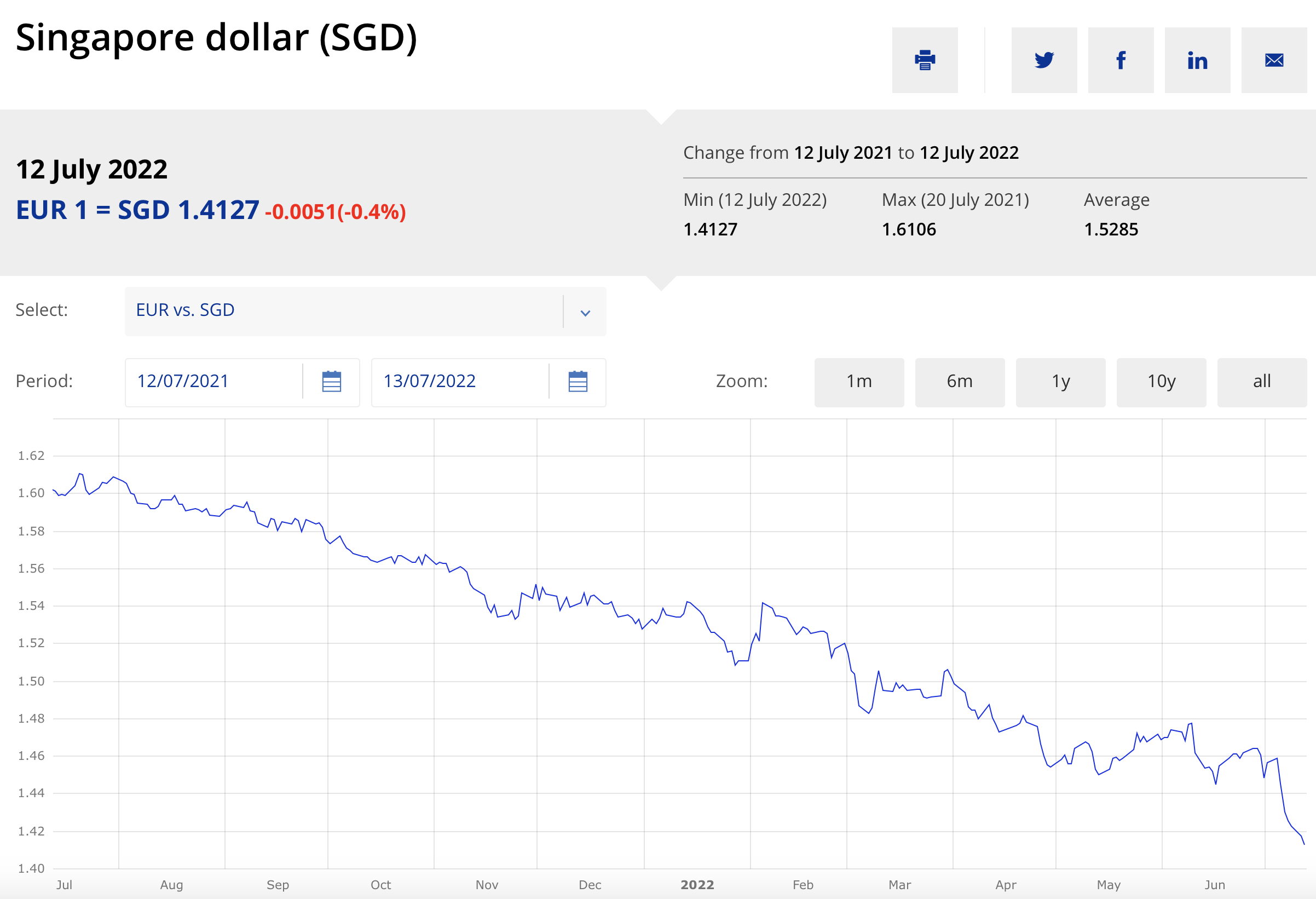
The Singapore dollar has hit an all-time high against the euro yesterday (Jul 12).

The Singapore dollar reached a record high of S$1=€0.71 (or €1 = S$1.41) on Tuesday, up about 9% since the start of the year. Fear that an energy crisis in Europe and the war in Ukraine will plunge the region into a recession has caused the euro to depreciate. The slide of the euro also saw that it reaches parity against the US dollar in two decades.

Source: European Central Bank

According to historical data, the last time the Singapore dollar hits €1 = S$1.41 was back in February 1985.

To fight inflation, Singapore has adopted an aggressive monetary policy by appreciating the Singdollar. The stronger Singapore dollar also saw that it strengthen against several currencies in the region including the Malaysian ringgit (S$1 = RM3.15), Thai baht (S$1 = THB25.72) and the Indonesian rupiah (S$1=10,637 IDR).


Read More...

Asian markets soar as China shortens the COVID-19 quarantine period for international visitors

inbound passengers waiting to be taken to quarantine-designated destinations

In a significant relaxation of one of the tightest COVID-19 limitations, China has cut the length of the quarantine period for incoming tourists by half.

The period of quarantine in centralized facilities has been shortened from 14 to seven days, and the subsequent period of at-home health monitoring has been shortened from seven to three days.

The most recent health authority recommendations also relaxed quarantine rules for persons who are near those who have tested positive for COVID-19. In addition, the three-week quarantine period that had been in effect throughout the epidemic, according to the authorities, has been reduced to ten days.

Tourism updates

This month, the Chinese aviation authority said that it has been in contact with a few nations to gradually raise the number of flights in the second half of 2022.

The Disneyland theme park, which had been closed for more than three months, would reopen on 30 June at the Shanghai Disney Resort. Experts in the industry predict that this year’s summer travel season will be buzzier than previous year’s due to the increased confidence being generated by the circumstances aimed at reducing the risk of outbreaks.

woman and daughter poses at Shanghai Disneyland

Image Credits: latimes.com

An uptick in Asian markets

On 28 June, most Asian markets recovered some of their earlier losses, and oil maintained its current uptrend after China shortened the visitor quarantine period, stoking hopes for a lifeline to the faltering economy.

The Hang Seng Index reversed losses and increased by around 0.4 percent, and the CSI300 Index increased by about 0.7 percent, leading to gains in the stock markets in China and Hong Kong. Seoul, Tokyo, and Shanghai turned up after spending the morning of 28 June in red, and there were also increases in Manila and Bangkok.

Inflation and interest rates will probably take a good turn

Some observers continue to be somewhat cheerful as the second half of the year draws near, even though the inflation and interest rate situation is still a concern, made worse by the conflict in Ukraine.

Although the first half of 2022 is the worst since 1970, a market expert pointed out that history shows that when the first half of the year is down at least 15 percent, the second half of the year is usually always up, with an average yield of 24 percent.

Another person said that dealers had already taken into account a considerable portion of the anticipated economic deterioration. It is possible for inflation concerns to be reduced gradually and for a “U-shaped” recovery to be driven by a slowdown rather than a recession.

And if there’s a tip for investors, that would be for individuals to concentrate on low-cost, defensive investments while addressing any risks in the midst of it all.

Read More...

How to Create Investment Goals

When it comes to investing, goal-setting is a vital step toward achieving financial success. Achievable goals can help you narrow your focus, stay motivated, and create a plan. In this article, you will learn the importance of goals and the steps to take.

#1: DETERMINE YOUR GOALS

Start by determining exactly what you want to achieve. Common investing goals include saving up for child’s education, retirement, and a house. Good investment goals need to be SMART. SMART stands for the following:

Specific: Setting a specific financial goal requires laying out the purpose for why you want to save.

Measurable: Financial goals need to be easily measured to help you assess your progress.

Achievable: Setting goals that are not achievable can diminish your motivation and steer you away from your path.

Relevant: A good investment goal should align with your values and beliefs.

Time-Bound: Calculate how much you need to save monthly or weekly to achieve your investment goal by providing a sense of urgency.

#2: SELECT YOUR INVESTMENT STRATEGY

According to the Financial Industry Regulatory Authority (FINRA), there are different types of goals such as short-term, mid-term, and long-term. Short-term goals can be achieved in less than three years and may be suited to liquid investments such as cash and money market accounts. Mid-term goals that can take up to ten years can be allocated to balancing your portfolio, fixed-income investments, and stocks.

Lastly, long-term goals that can last more than ten years can take a more aggressive approach such as investing in stocks, mutual funds, and exchange-traded funds.

#3: TAKE SMALL STEPS

New investors and those who are more risk-averse can start small to get a better understanding of the process. Adjustment to the investor’s approach can make goals more realistic and achievable.

#4: SEEK PROFESSIONAL SUPPORT

Countless social media pages and credible blogs provide financial advice about investing and other topics. Many investing platforms have educational resources on their website. It is up to you to do your research and seek professional support when needed.

BOTTOM LINE

Assess your investment goals as early as possible to avoid difficulties and complications. Planning and execution of your investment processes require a level of discipline and commitment. Start small if the process feels overwhelming and watch your nest grow.

Sources: 1 & 2

Read More...

Tips to educate your kids on investing

teaching kids how to invest

Time is your best friend when it comes to investing. The longer time you allow your assets to develop, the bigger your retirement fund will be. The problem is that most individuals aren’t educated about investing until they’re in their adult years. And by that time, most have already squandered over two decades.

Traditional educational systems often do not educate children about investing, such as why they should acquire stocks while they are young and how to build a diversified portfolio that will last them until retirement. As a result, it is incumbent on parents to prepare their kids for financial security. Fortunately, financial literacy can be taught from the comfort of one’s own home.

Here are tips to educate your kids on investing.

Patience is key

Investing, like most pleasures in life, takes patience. Instill in your kids the understanding that investing is not a get-rich-quick gimmick. Rather than anticipating a rapid return, the idea is to put money into the stock market and watch it increase over time. This piece of advice will set more realistic goals for your child when it comes to investing from the get-go.

Gift them investment books
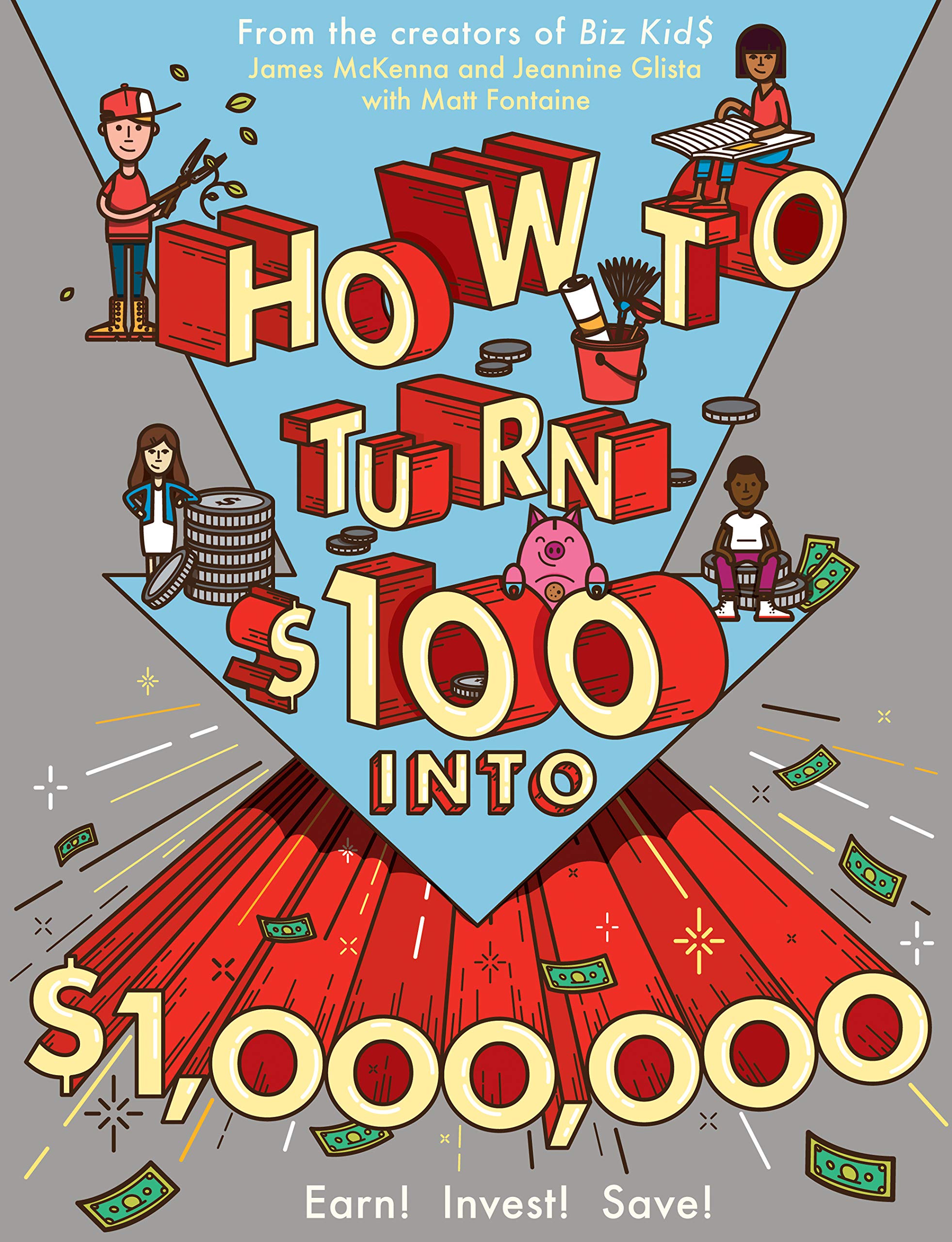
How to Turn $100 into $1,000,000: Earn! Save! Invest!

Image Credits: amazon.com

There are several excellent finance-related books for kids and teenagers that may help your child learn more about investing. For example, How to Turn $100 into $1,000,000: Earn! Save! Invest! is ideal for any parent who wishes to raise a child who is financially savvy and secure. The quest begins with instructions on how to make a first hundred bucks while the rest of the book follows the path to a million dollars. What’s there not to like about it?

Introduce familiar companies

For years, the expression “buy what you know” has been tossed about in investment circles. It’s important to teach kids how to invest by putting their money in firms they recognize. Today’s children are well-versed in product branding and are adept at conducting web searches. Consider inviting your kid to spend time with you investigating the stock price of a firm they are interested in.

Look up the payout history during the search and clarify why they will get the declared dividend amount for each share of stock they hold. You could perhaps suggest reinvesting returns to continue expanding the asset, based on your child’s financial literacy level. Kids may become long-term investors by investing in what they know: if they clearly understand the firm and grasp what drives its operation, they are more inclined to stick it out during moments of instability.

The sooner you start introducing concepts of investments to your children, the more probable they will establish good financial habits and accumulate money over time. You may even be amazed at how much your children can comprehend, notably if you start teaching them diverse tactics at an early age. Don’t put off the thought of helping them start saving for retirement; they will thank you down the road.

Read More...