Possible Career Shifts To Conquer 3 Dying Industries In Singapore

Whether you are willing to admit that you are in a dying industry or not, it is a difficult disposition that several of us have to face at one point in our lives. If there are substantial evidences that your industry is doomed, perhaps it is time to weigh your options.

1. FROM PRINT MEDIA TO DIGITAL MEDIA

As my university professor have predicted, one of the industries that was negatively impacted by modern technology was print media. I am talking about the tangible reading materials such as magazines and newspapers. A good illustration of this seemingly dying industry is the closure of the Cosmopolitan Singapore last year. According to their 2014 Nielsen Media Index report, the racy magazine’s readership stood at 22,000. These low numbers did not win the hearts of many advertisers! Hence, everything went downhill from there.

More and more readers have turned into digital media with the rapid growth of larger smartphones (with wider screens) and efficient tablets. In 2012, a global study by Ericsson estimated that approximately 1 in 3 Singaporeans owns a tablet. These flat and handy devices provide a more convenient way to download and read digital publications.

If you want to part ways with the print media, consider turning to the “IT” crowd by joining the club of people who switched to the digital scene. Jobs such as freelance writer, social media manager, and graphic designer are up for grabs!

Image Credits: pixabay.com

Image Credits: pixabay.com

2. FROM TRAVEL AGENCY TO TRAVEL BLOGGING

Be honest. When was the last time you booked a trip through a travel agent? I do not remember either!

Whenever I am book for my vacation, I do everything in the comfort of my own home. I start by looking extensively for the best airfare deals available. Then, I read several TripAdvisor or blog reviews about my intended destination. This is followed by a series of searching for quality accommodations at Airbnb, Agoda, and Expedia.

Why shall I hire the services of a middleman when I can go directly to the source and save more effort, time, and money?

These thoughts echoes the mindset of many Singaporean travelers. The exit of big travel agencies such as Five Stars Tours is just another sign on where this industry is heading.

With your wealth of knowledge and experience as a travel agent, you can consider to become a travel journalist or a travel blogger. Highly qualified individuals can enjoy a good salary and a free pass to various places in the world. Are you on-board?

3. FROM DEPARTMENT STORES TO FUNERAL SHOPS

Say you were a part of the salespeople who lost their jobs due to the closure of Isetan Wisma branch or Metro Sengkang branch. Consider diving away from selling vibrant products such as perfumes and swimming towards selling “lifeless” products such as coffins. You read that right!

Ironically, the death industry is one of the hottest industries right now. More graduates are now applying for the funeral sector as the younger generations are more dismissive of superstitions. Worry not about being called an undertaker because has been re-branded to “funeral director.” Sounds more sophisticated, right?

Image Credits: pixabay.com

Image Credits: pixabay.com

Note: The aforementioned dying industries are based on the predictions made by a recruitment professional, Adrian Tan of Singapore Business Review

Read More...

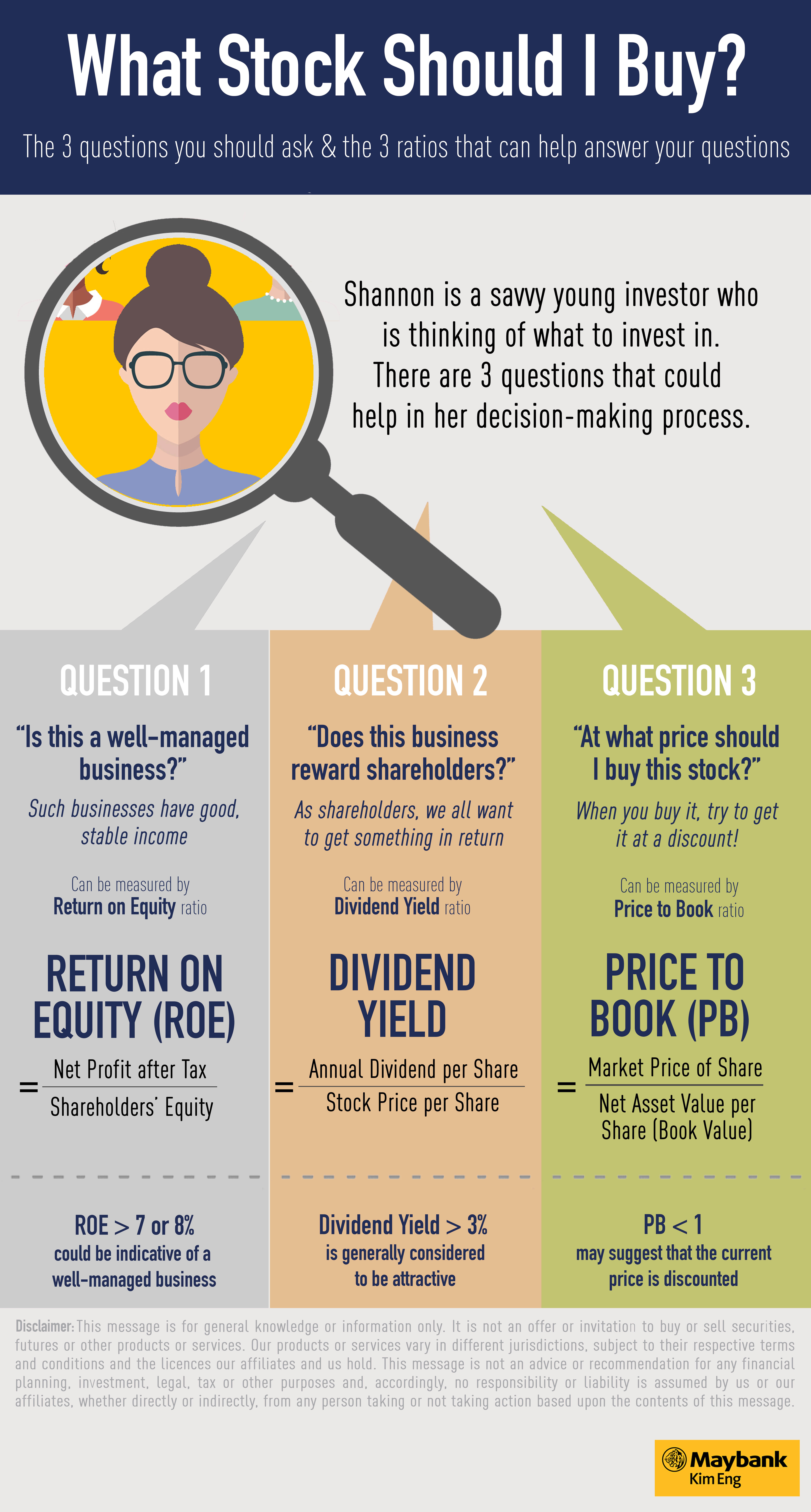
What Stock Should I Buy?

Warren Buffett once said, “it is not necessary to do extraordinary things to get extraordinary results.” When it comes to finding stocks worth investing in, we simply need to ask the right questions.

We share 3 of these questions with you, and 3 financial ratios that can help answer your questions.

160715 What Stock Should I Buy
What if you don’t have a stock in mind? After all, there are over 9,000 stocks on the Singapore Exchange (SGX), New York Stock Exchange (NYSE), NASDAQ and Hong Kong Stock Exchange (HKex) alone and brokers like us offer  access to many more markets including Thailand, China, Indonesia, Malaysia and the Philippines.

There are tools out there that can help you identify stocks using ratios like the ones above. Click here to learn how stock screeners can help you identify trading opportunities.

Read More...

Why The Current Generation Of Singaporeans Must Save Longer For Retirement

It is no secret that Singaporean and expat workers have to face a higher cost of living compared to other cities in the world. In order to cultivate a sufficient retirement fund, these employees have to save nine years longer than the preceding generations. This information is according to the recent HSBC report that included 1,008 Singaporeans who are either working or retired.

Findings in “HSBC’s Future Of Retirement: Generations And Journeys” report showed that the average Singaporean begins saving for retirement at age 32 and continues it for another 29 years. Simple arithmetic will tell you that the previous generations of Singaporeans used to save at an average of 20 years.

Despite having the advantage of saving for a longer period of time, 41% of the participants wished that they had started to save earlier. This tone was supported by the 38% of the participants who stopped saving money due to several difficulties.

Mr Matthew Colebrook, the head of retail banking and wealth management in HSBC Bank Singapore, highlighted that: “in many instances, life events are also getting in the way of setting aside money earlier or in a consistent manner.” This is one of the significant roadblocks that keep Singapore workers from maximizing their retirement fund.

Another roadblock that is worth mentioning is the “tunnel vision” that Singaporeans apply when investing. Often they exclude other forms of assets and focus on cash savings and properties. In fact, the report found that 21% of Singaporeans anticipate that selling or downsizing a property can help them fund their retirement.

Mr. Colebrook made another potent statement concerning this tunnel vision. According to him, “all asset classes’ performance will rise and fall as the current softening of the Singapore property market and low deposit rate environment show us. This speaks volumes for why it is important to seek diversification in a savings plan.”

Image Credits: www.pixabay.com

Image Credits: www.pixabay.com

To gain information about the diversification of a retirement plan as well as other strategies to grow your wealth, you must educate yourself or even seek the help of a financial professional. A financial professional can help tailorize a strategy that suits your personality and lifestyle the best.

Sources: 1 & 2

Read More...

7 Ways To Secure Your Online Transactions

With the modern convenience to shop and transact online, comes the great responsibility to protect the users privacy!

Providing information for your online activities can put your identity and your wealth at risk. To avoid this, you must be informed, cautious, and vigilant at all times.

1. BE AWARE OF YOUR SURROUNDINGS

One of the easiest ways to protect your sensitive information is by being sensible about where you transact. Do not input your details in public where people can intentionally or unintentionally view your screen. This may sound obvious for most but, it is not for some! I have witnessed some people who gave out their credit card details while calling their creditors on the train.

It may be extremely convenient for you to close a transaction while on your way to work, but think about the people who might be catching a glimpse over your shoulder.

2. CONTROL YOUR AUTHENTICATION AND PRIVACY SETTINGS

Maximize the use of your privacy settings by using two-factor authentication. Often used in online banking, two-factor authentication involves “what you know” (e.g., 8-digit password) and “something you have” (e.g., verification code sent via SMS). This way, people will have a difficult time to break through your walls.

3. SPOT UNUSUAL TRANSACTIONS

Just because your bank is known worldwide because of its sophisticated security does not mean that they are 100% free from errors, frauds, and glitches. It is important to watch out for any unusual transactions both on virtual and physical statements. Call your bank immediately if you spot anything fishy.

4. KNOW THE OFFICIAL DOMAIN NAME

When you are receiving emails from banks or online shops, always check the attached links’ domain name. This can be a tad tricky as some scammers use a slightly different domain name to trap the vulnerable consumers.

Hence, you shall be familiar with the official domain names ass well as the URLs of your banks before processing your transactions. The moment that you find anything wrong, call them directly.

5. SECURE YOUR BROWSER

Search engines, especially those with big names, track your search history and build personalized profiles to provide results based on your search history. To escape from this “filter bubble”, you must switch to a search engine that does not track your every move.

Emphasizing on protecting the user’s privacy, DuckDuckGo is always my go-to safe search engine!

6. DO NOT CLICK THE RANDOM LINKS

Before clicking any links that will re-direct you away from the online bank or shop, verify its legitimacy first. Always think twice even if the message comes from a familiar place. The same goes routine must apply when you receive an email from any financial institutions.

7. UPDATE YOUR SOFTWARE REGULARLY

Aside from backing up your data, it is vital to update your software regularly as latest security patches minimize the threats of bugs, viruses, and other malwares. Increase your shield by using free programs that scan your computer for bugs, viruses, and other malwares that come from external sources.

Image Credits: www.wikihow.com

Image Credits: www.wikihow.com

Shielding yourself when transacting online takes focus and dedication, but it is definitely doable. May the “7 ways” mentioned above give you a head-start to better cybersecurity!

Sources: 1, 2, & 3

Read More...